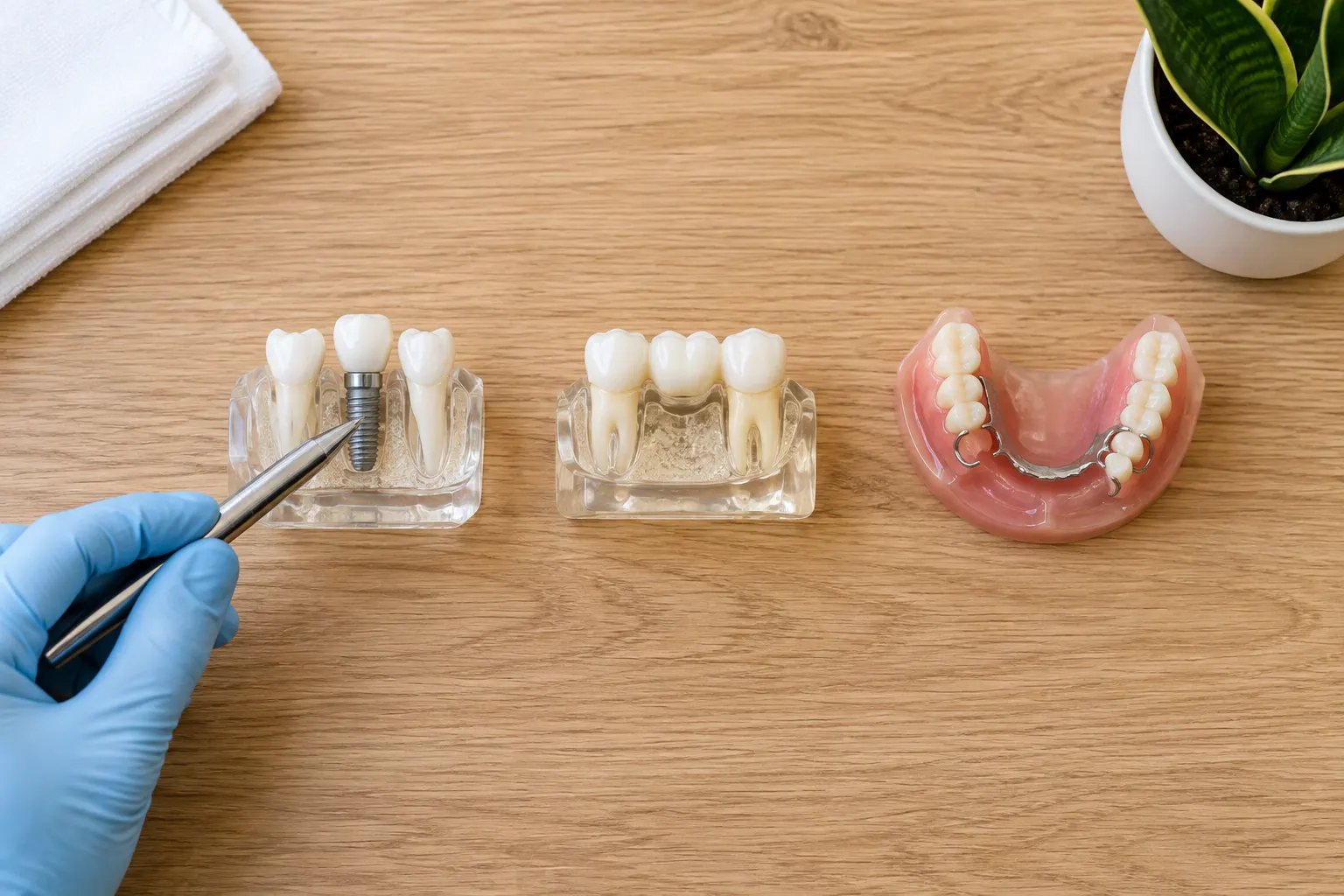
An implant replaces the root of a missing tooth. Once the bone has bonded to it, a crown is fixed on top. It doesn’t rely on neighbouring teeth, and it helps preserve the jawbone that shrinks after a tooth is lost.
You might need this if…
- A missing tooth or teeth
- A loose or uncomfortable denture
- A tooth that cannot be saved
- You don’t want neighbouring teeth cut for a bridge
How it’s done
- 1
Assessment
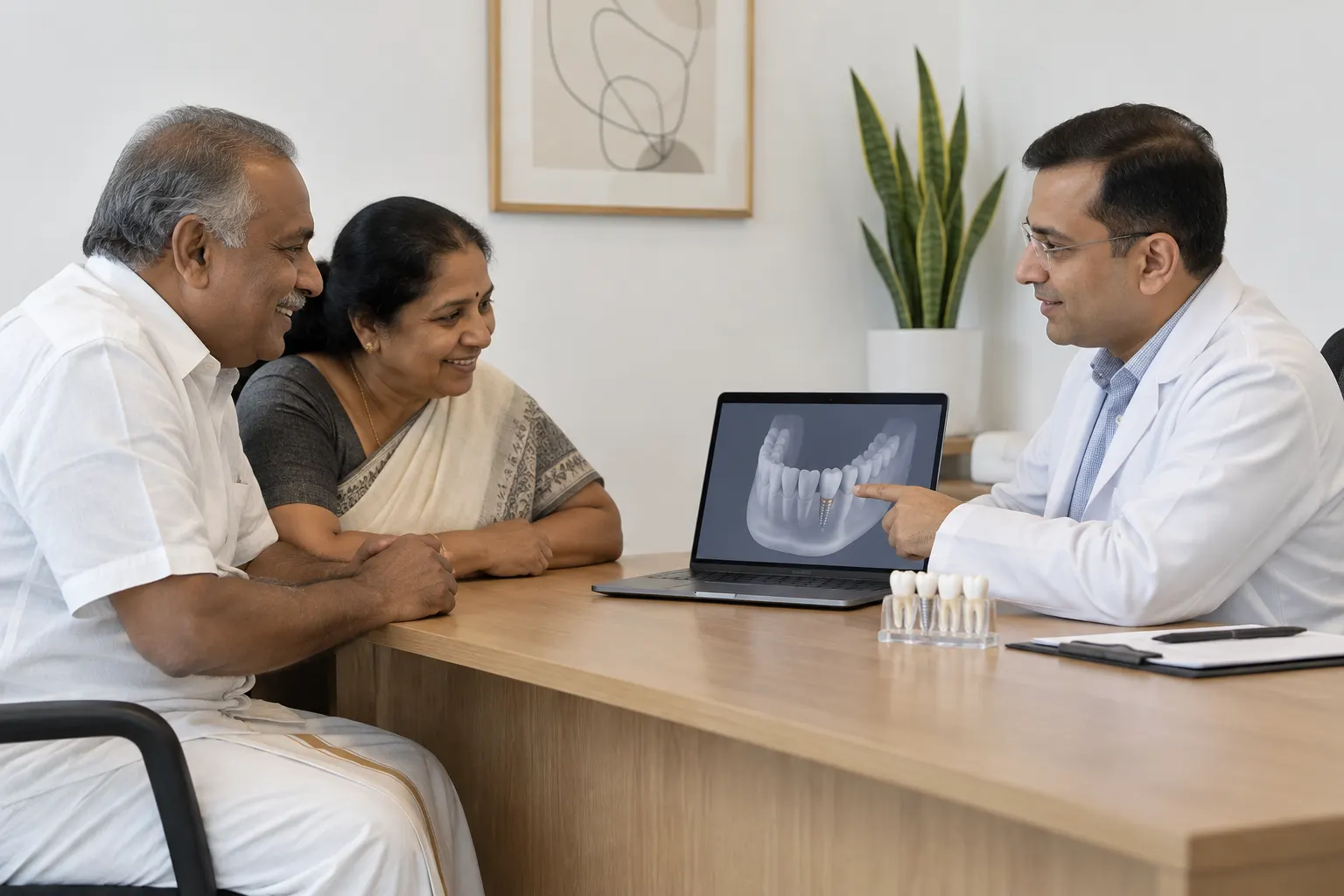
We check your general health, gums and the bone available. Some cases need a 3D scan, which we arrange at a trusted imaging centre.
- 2
Placement
Under local anaesthesia the implant is placed in the jaw in a short procedure.
- 3
Healing
Over roughly three to six months the bone bonds to the implant. A temporary tooth can often be worn meanwhile.
- 4
The crown
An abutment and a custom crown are fitted, matched to your other teeth.
Afterwards
- Soft diet and gentle rinsing for the first few days after placement.
- No smoking. It significantly increases implant failure risk.
- Clean around the implant daily and keep regular check-ups.
Questions patients ask
It is done under local anaesthesia. Most patients describe the following days as less uncomfortable than an extraction.
Most healthy adults can. Uncontrolled diabetes, heavy smoking and some medicines can affect healing, and some people need bone grafting first. We assess this before recommending it.
Often, by splitting treatment over two trips: placement on the first, the crown on the next once healing is complete. Contact us before you travel so we can plan the dates.
This page is general information, not a diagnosis. We will advise you properly after an examination.