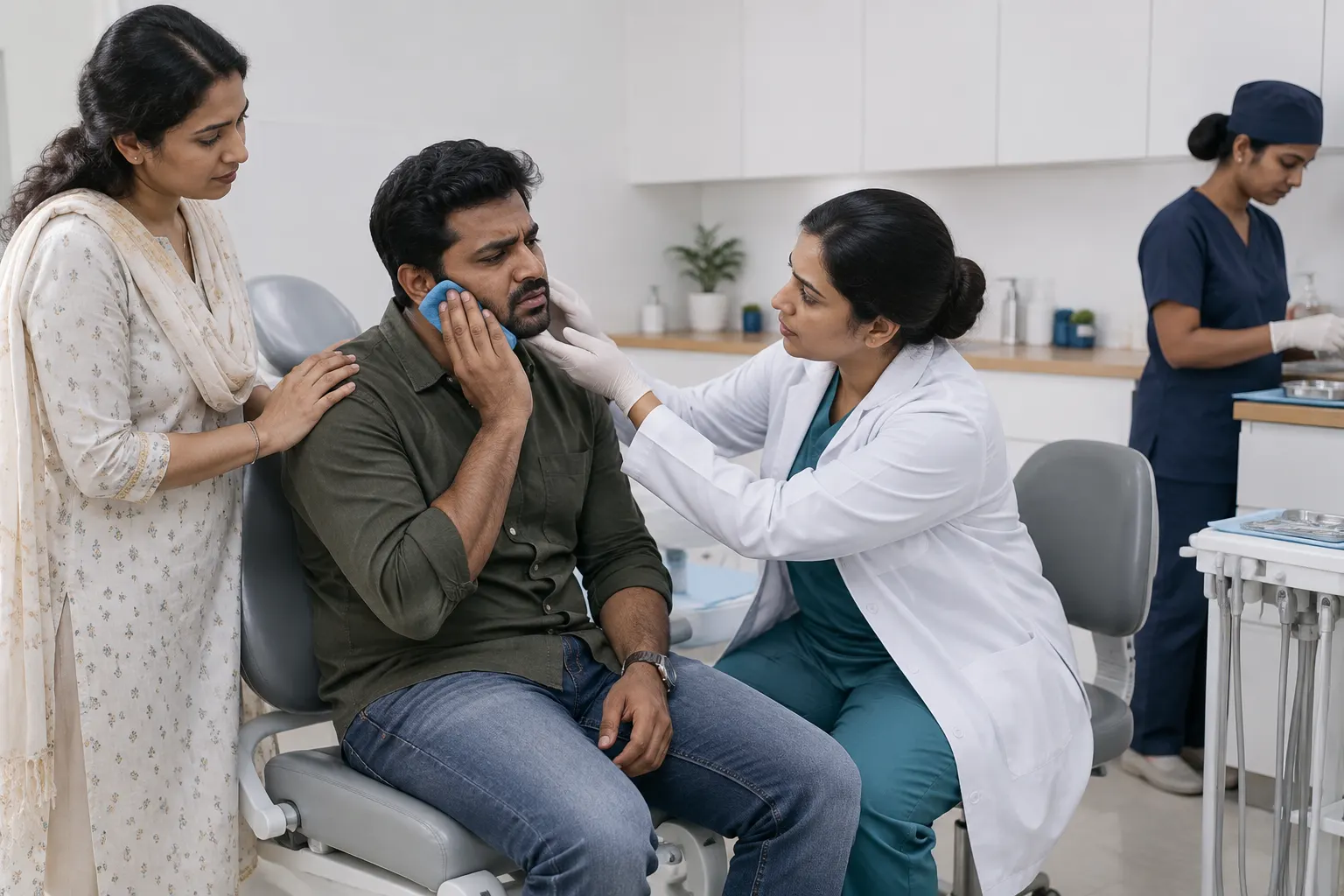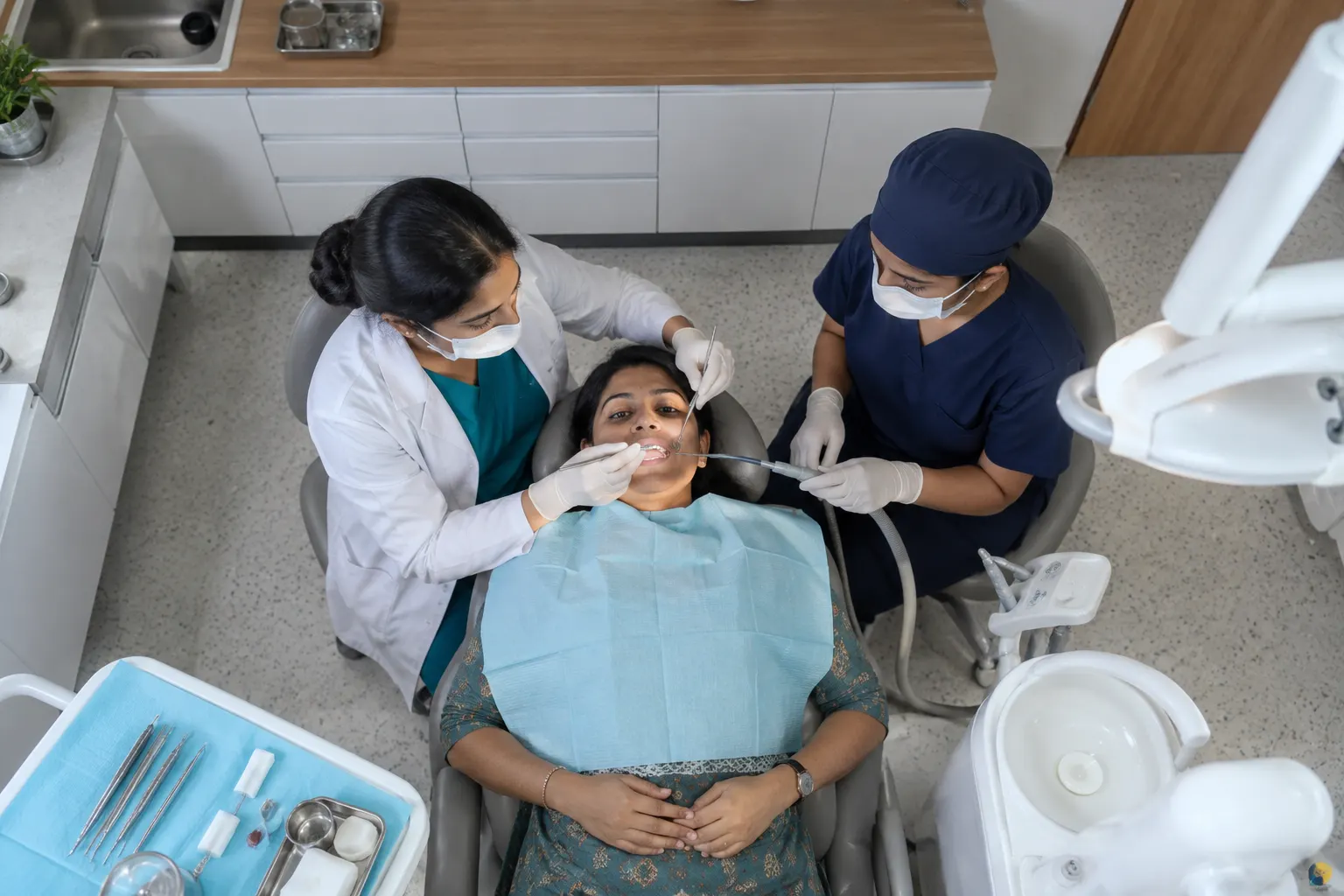
We always try to save a tooth first. When that isn’t possible, or a wisdom tooth is causing repeated problems, removal under local anaesthesia relieves pain and protects the teeth around it.
You might need this if…
- A broken tooth that can’t be restored
- Pain and swelling at the back of the jaw
- A wisdom tooth that keeps getting food stuck or gums inflamed
- Loose teeth from advanced gum disease
How it’s done
- 1
Assessment
A digital X-ray shows root shape and position. Complex wisdom teeth may need an OPG scan, which we arrange.
- 2
Anaesthesia
The area is fully numbed; you feel pressure, not pain.
- 3
Removal
The tooth is loosened and removed; difficult teeth are sectioned to minimise trauma. Stitches are placed if needed.
- 4
Aftercare
You leave with written instructions and a number to call.
Afterwards
- Bite on gauze for 30–45 minutes; don’t rinse or spit hard for 24 hours.
- Cold compress on the cheek for the first day; soft, cool food.
- No smoking or straws for at least 48 hours. They can dislodge the clot.
- Call us if bleeding doesn’t stop, or pain worsens after day three.
Questions patients ask
No. Healthy wisdom teeth that have erupted properly and can be cleaned can stay. We recommend removal when they cause infection, decay, gum problems or damage to the neighbouring tooth.
Once the numbness wears off, eat soft, cool food on the other side. Return to normal food gradually over a few days.
Back teeth help you chew and keep neighbours in place. We’ll discuss whether an implant, bridge or denture makes sense.
This page is general information, not a diagnosis. We will advise you properly after an examination.