Many parents in Kerala first bring their child to the dentist when something already hurts. That makes the first visit a painful one, and a child who associates the dentist with pain can carry that fear for decades. The better plan is an early, easy visit when nothing is wrong. Here is a practical guide, age by age.
When should the first visit be?
By your child’s first birthday, or within six months of the first tooth appearing. That surprises a lot of parents. At this age the visit is mostly a conversation with you: how to clean tiny teeth, what to do about night feeds, and how to spot early decay. Look for white, chalky lines along the gum, which appear long before a hole does.
Age by age
0–2 years
- Wipe gums with a clean, damp cloth after feeds; brush as soon as the first tooth arrives.
- Use a smear of fluoride toothpaste the size of a grain of rice.
- Avoid putting your child to sleep with a bottle of milk or juice. Sugary liquid pooling around the teeth overnight is one of the commonest causes of severe early decay.
3–6 years
- Move up to a pea-sized amount of fluoride toothpaste.
- Brush for them, children don’t have the dexterity to clean properly on their own until about 7 or 8. Let them have a turn, then you finish.
- This is a common age for the first cavities in back teeth. Regular check-ups catch them while they are small.
6–12 years
- The first permanent molars arrive around 6, behind the baby teeth, often unnoticed. They are the teeth most likely to decay. Sealants, a protective coating painted into their grooves, are quick, painless and very effective.
- Around 7 is a good time for an orthodontic check.
- Mouthguards for cricket, football and other contact sports.
“They’re only milk teeth: do they need fillings?”
Yes. Back milk teeth stay until around 10 to 12 years old. Decay in them causes pain and infection, can damage the adult tooth developing underneath, and losing them early lets other teeth drift and crowd the adult teeth.
Preparing your child for the visit
- Keep it light. “The dentist is going to count your teeth” works better than any long explanation.
- Choose your words. Avoid “hurt”, “injection”, “drill”, and never use the dentist as a threat.
- Pick the right time. Mornings, after a nap, when they are fed and rested.
- Bring a favourite toy. It can have its teeth counted too.
- Stay calm yourself. Children read our faces. If you are anxious about dentists, it’s fine to let the other parent come in.
What happens at our clinic
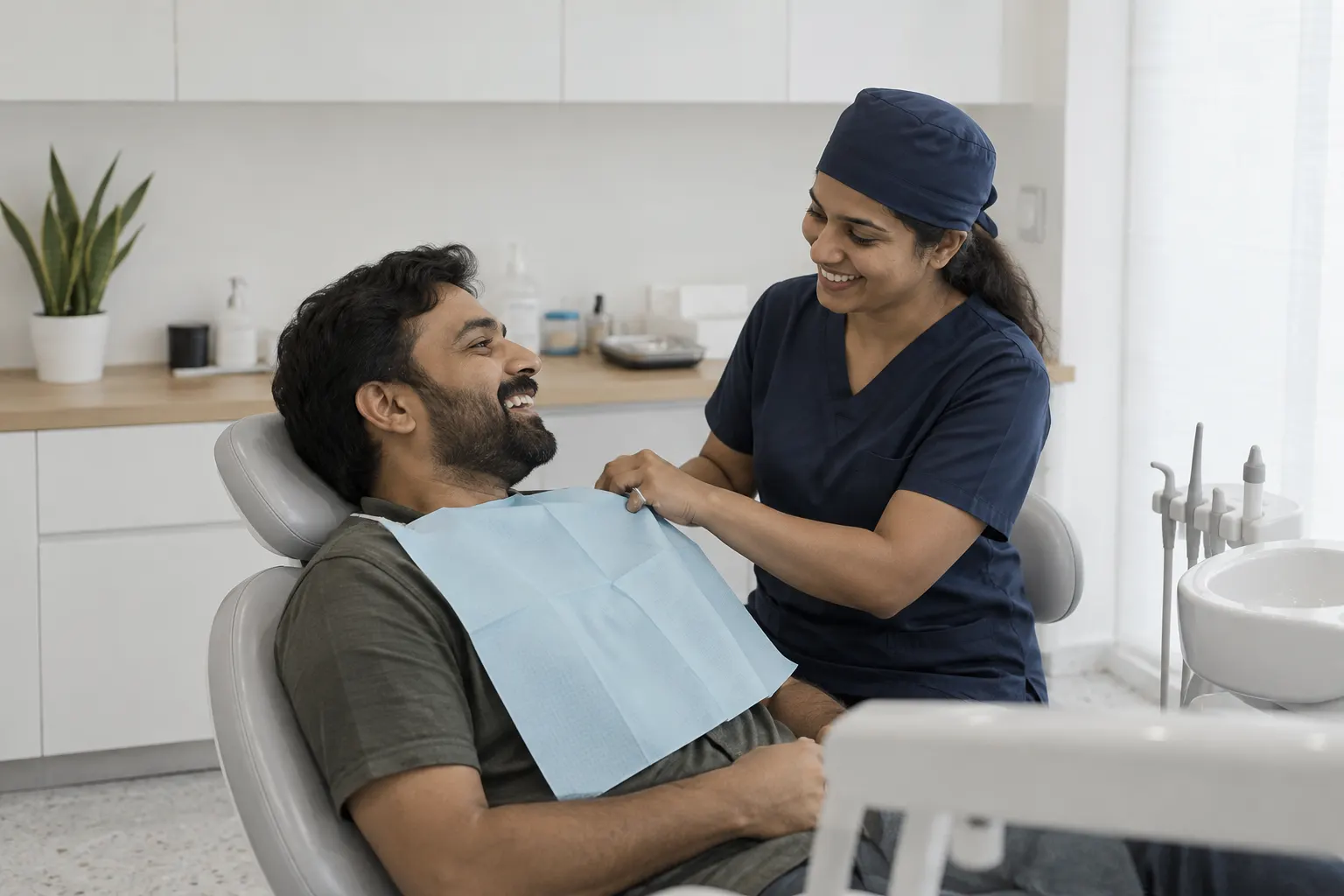
First visits are short and unhurried. Your child can sit on your lap or ride the chair up and down, see the mirror and the “water squirter”, and have their teeth counted. If everything looks healthy we may apply fluoride varnish. If something needs treatment, we usually plan it for another day, so the first memory stays a good one.
Book your child’s first visit, or bring them along at your own next check-up so they can see that the dentist is nothing to be afraid of.