If you have been told you need a root canal, you have probably also been told a story about one. Most of those stories are out of date. Here is what actually happens at our clinic, step by step, and why most patients leave surprised by how ordinary it felt.
Why a tooth needs a root canal
Every tooth has a soft core called the pulp, nerves and blood vessels running down through the roots. When deep decay, a crack or an old leaking filling lets bacteria reach the pulp, it becomes inflamed and eventually infected. That is what causes the classic signs:
- throbbing pain that wakes you at night
- sensitivity to hot or cold that lingers after the drink is gone
- pain when you bite down
- a swelling or small pimple on the gum near the tooth
Painkillers and antibiotics can quieten the symptoms for a while, but they cannot reach the bacteria inside the tooth. Without treatment the infection stays, and the pain usually returns.
What happens, step by step
1. Finding the cause. We examine the tooth and take a digital X-ray. The image appears on screen in seconds, so we can show you exactly where the infection is and how the roots are shaped.
2. Numbing. The tooth is anaesthetised fully before we begin. You will feel pressure and hear the instruments, but you should not feel pain. If you do, tell us. We will stop and give more anaesthetic.
3. Cleaning the canals. We make a small opening in the top of the tooth and clean out the infected pulp. Each canal is shaped with flexible rotary instruments, which follow the natural curve of the root more smoothly and quickly than hand files, and rinsed with disinfectant.
4. Sealing. The clean canals are filled with a biocompatible material and the tooth is sealed so bacteria cannot get back in.
5. Protecting the tooth. A back tooth that has had a root canal is more brittle. It almost always needs a crown afterwards to stop it cracking under chewing forces.
Does it hurt?
The honest answer: the infection hurts; the treatment relieves it. Under good local anaesthesia, most patients describe a root canal as feeling like a long filling. For a few days afterwards the tooth can be tender to bite on. That is the surrounding tissue settling, and it usually responds to simple painkillers.
One sitting or two?
Many root canals are completed in a single sitting. If the infection is severe, or there is a lot of swelling, we may place medicine inside the tooth and finish at a second visit once it has calmed down. We will tell you which applies before we start.
Root canal or extraction?
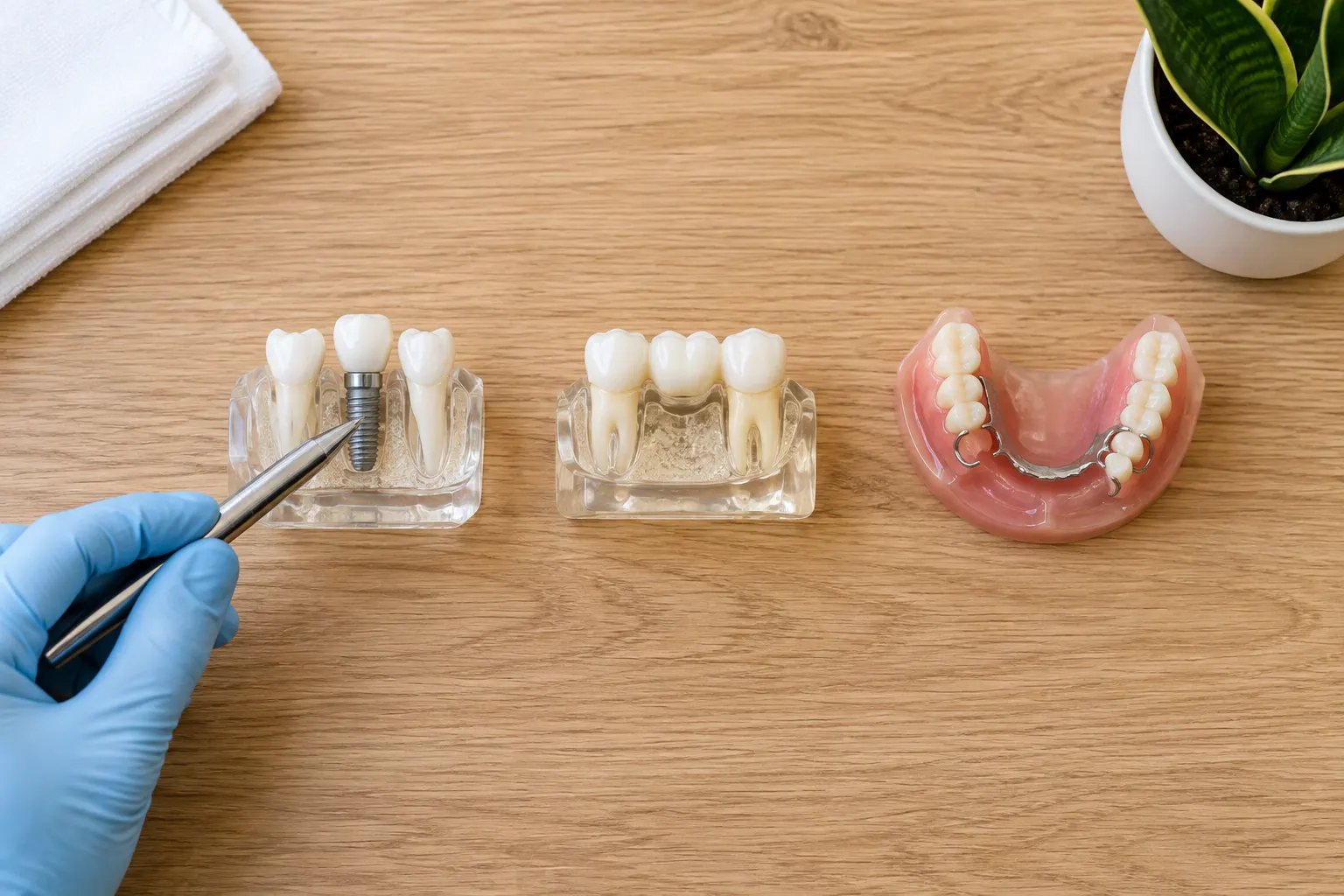
Removing the tooth can seem quicker and cheaper. But a missing back tooth usually needs replacing, with a bridge, an implant or a denture, and neighbouring teeth can drift into the gap. Keeping your own tooth is almost always the better long-term choice when it can be saved.
After your treatment
- Avoid chewing hard food on the tooth until the final filling or crown is in place.
- Brush and floss as normal.
- Do get the crown done when advised. An unprotected root-treated tooth can split, and a split tooth often cannot be saved.
If you have a tooth that has been aching, don’t wait for it to become an emergency. Book an appointment or call us. The earlier we see it, the simpler it is to treat.