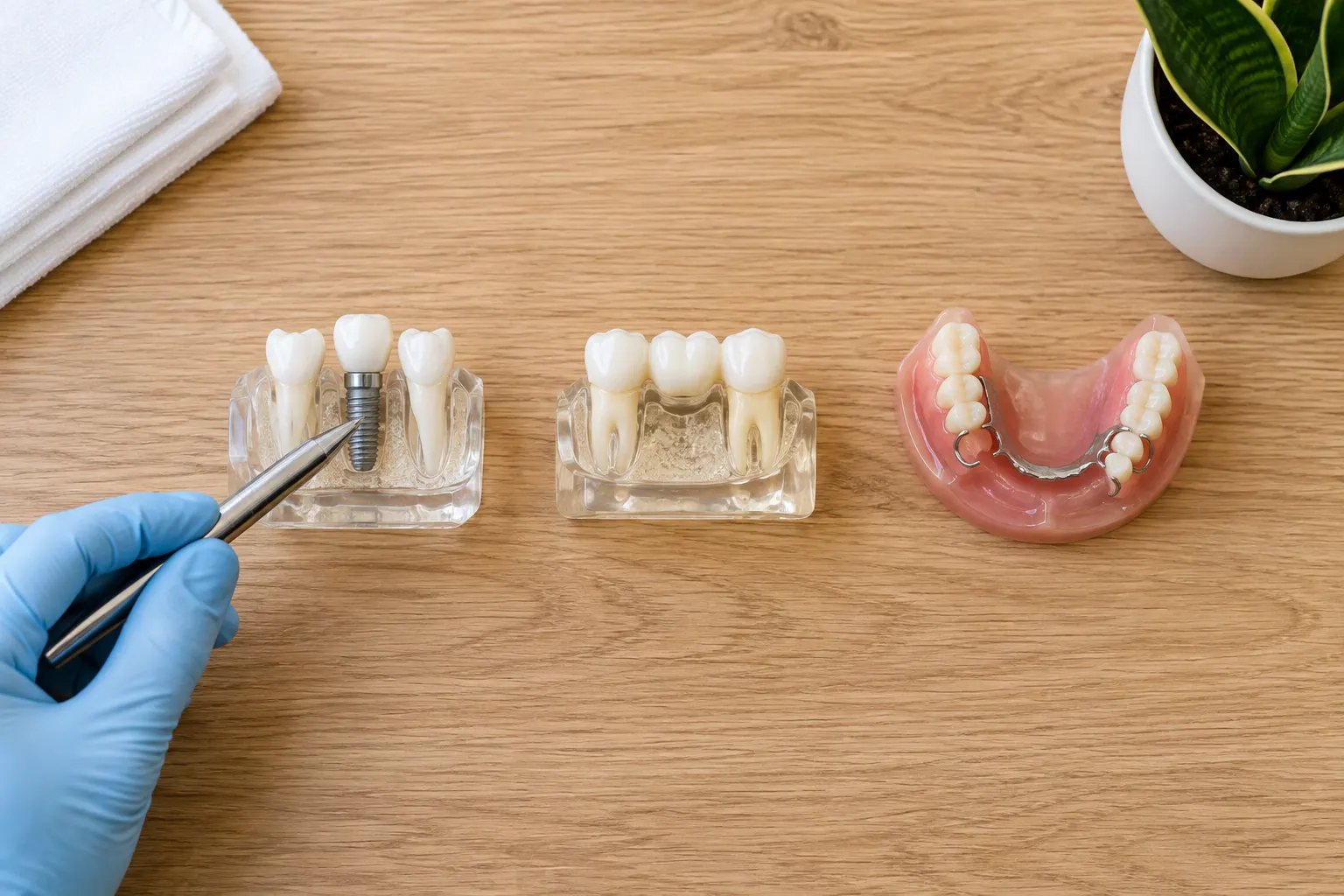
A crown covers a damaged tooth completely, restoring its shape and strength. A bridge replaces a missing tooth by anchoring a false tooth to crowns on the teeth either side. Both are fixed. You don’t take them out.
You might need this if…
- A cracked, broken or heavily filled tooth
- A tooth after root canal treatment
- One or two missing teeth
- An old crown that is loose or looks dark at the gum
How it’s done
- 1
Planning
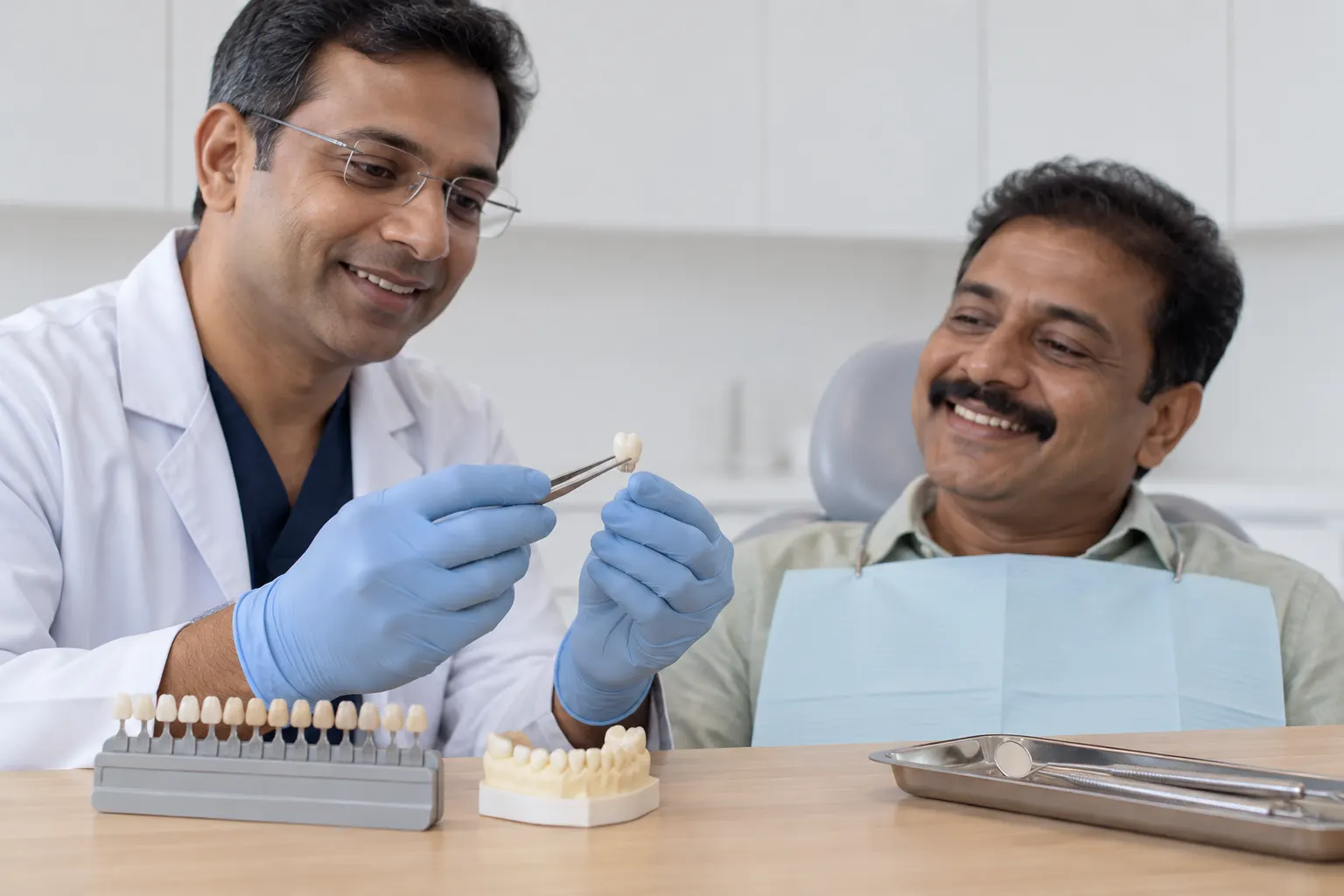
We check the tooth and roots with a digital X-ray and discuss materials (metal-ceramic, or all-ceramic/zirconia) and how they compare.
- 2
Preparation
Under anaesthesia the tooth is shaped and an impression is taken. A temporary crown protects it in the meantime.
- 3
Fitting
At the next visit we check fit, colour and bite before cementing the final crown or bridge.
Afterwards
- Floss under a bridge with a floss threader or interdental brush every day.
- Avoid very hard foods (ice, bones) on new crowns.
- Regular check-ups let us spot problems at the edges early.
Questions patients ask
With good care many crowns last ten years or more. Gum health, grinding and the underlying tooth all affect this.
Ceramic and zirconia crowns are matched to your natural shade, so they blend in.
A bridge is quicker and needs no surgery, but involves shaping the neighbouring teeth. An implant replaces the tooth on its own. We’ll explain which suits your mouth.
This page is general information, not a diagnosis. We will advise you properly after an examination.