Gum disease is one of the most common reasons adults lose teeth, and it is often painless until late. It starts as gingivitis (bleeding gums), which can be reversed. Untreated, it can become periodontitis, where the bone holding teeth is lost.
You might need this if…
- Gums that bleed when you brush
- Red, swollen or tender gums
- Bad breath or taste
- Teeth that look longer or feel loose
How it’s done
- 1
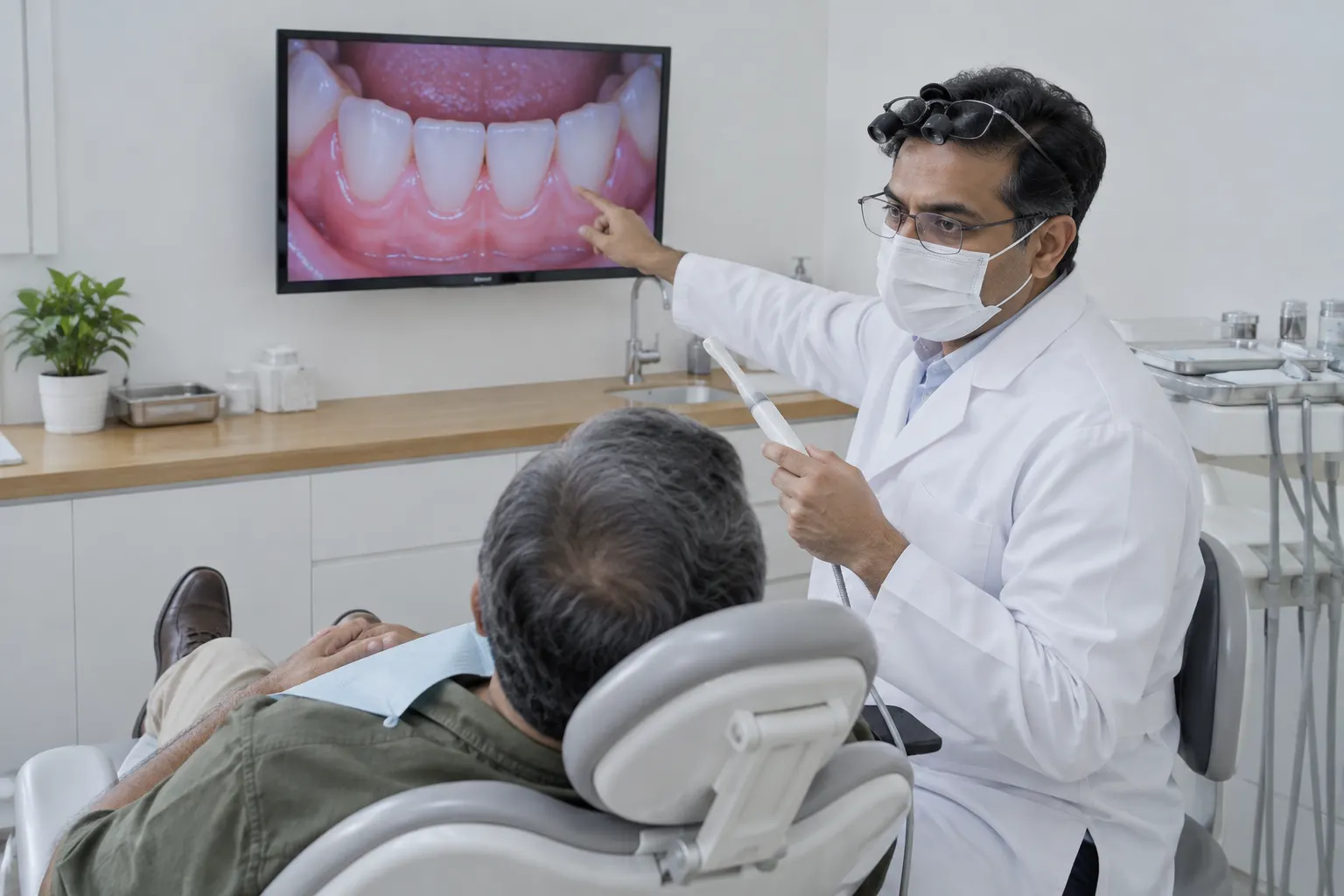
Gum assessment
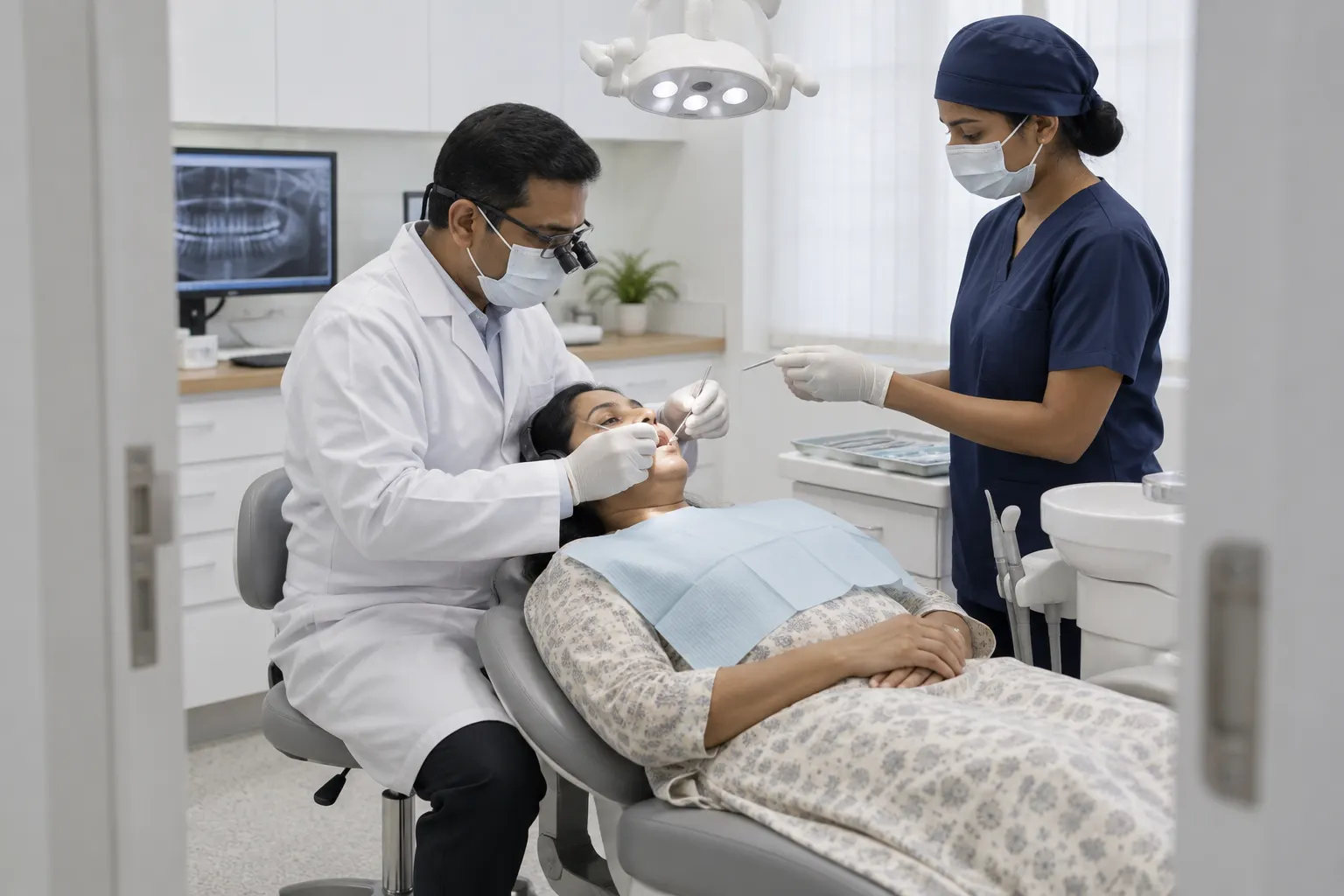
We measure the pockets around each tooth and take X-rays to check bone levels.
- 2
Deep cleaning
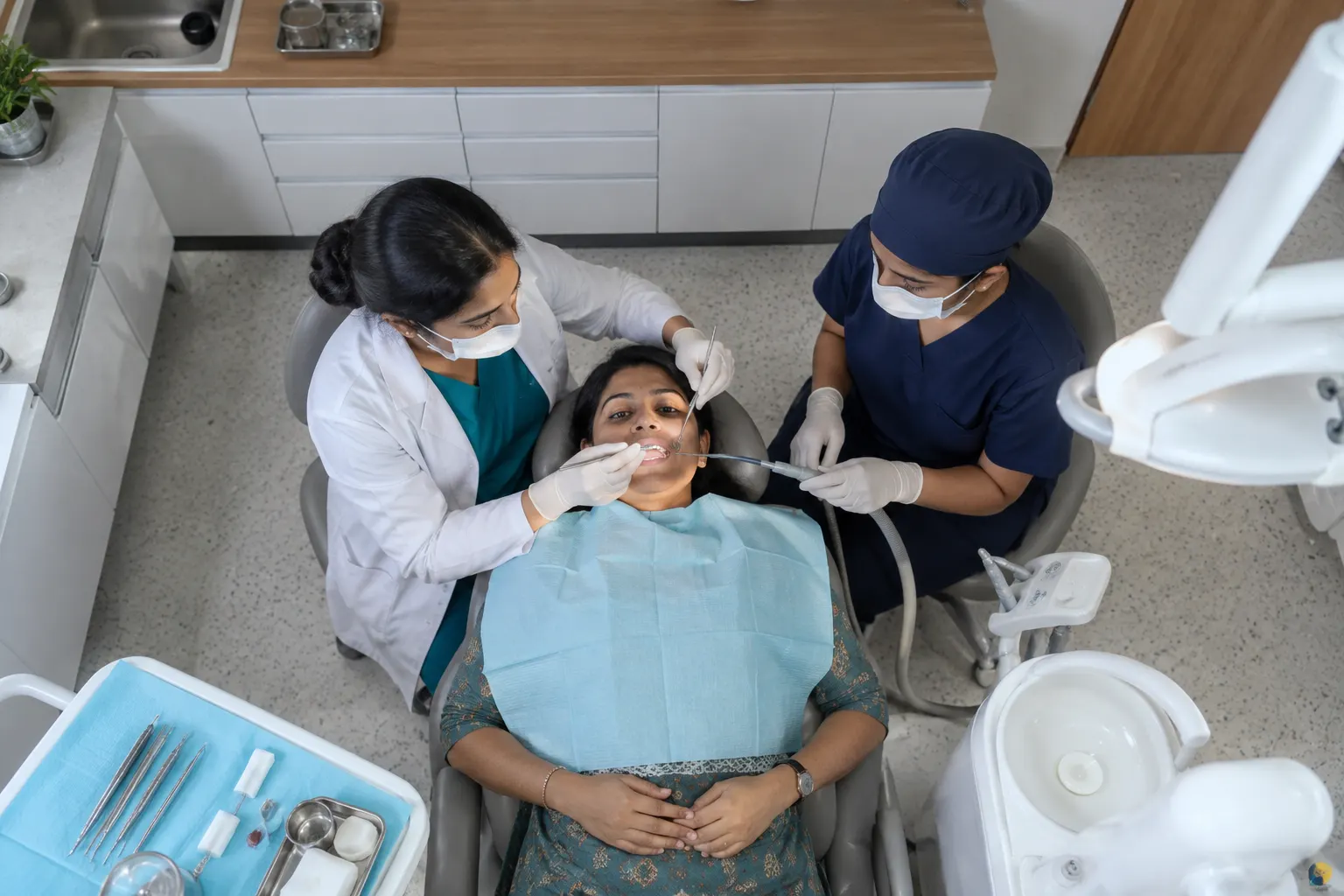
Scaling and root planing under local anaesthesia removes tartar and bacteria from below the gumline.
- 3
Home routine
We show you the brushes and technique that work for your mouth.
- 4
Maintenance
Regular reviews keep the disease under control.
Afterwards
- Expect mild tenderness and sensitivity for a few days.
- Keep brushing even if gums bleed at first. Bleeding reduces as they heal.
- Diabetes and smoking both worsen gum disease; managing them helps your gums.
Questions patients ask
No. Healthy gums don’t bleed. Bleeding is the earliest sign of gum disease and the easiest stage to reverse.
Yes, in both directions. Diabetes makes gum disease worse, and untreated gum disease can make blood sugar harder to control. Tell us if you are diabetic.
This page is general information, not a diagnosis. We will advise you properly after an examination.