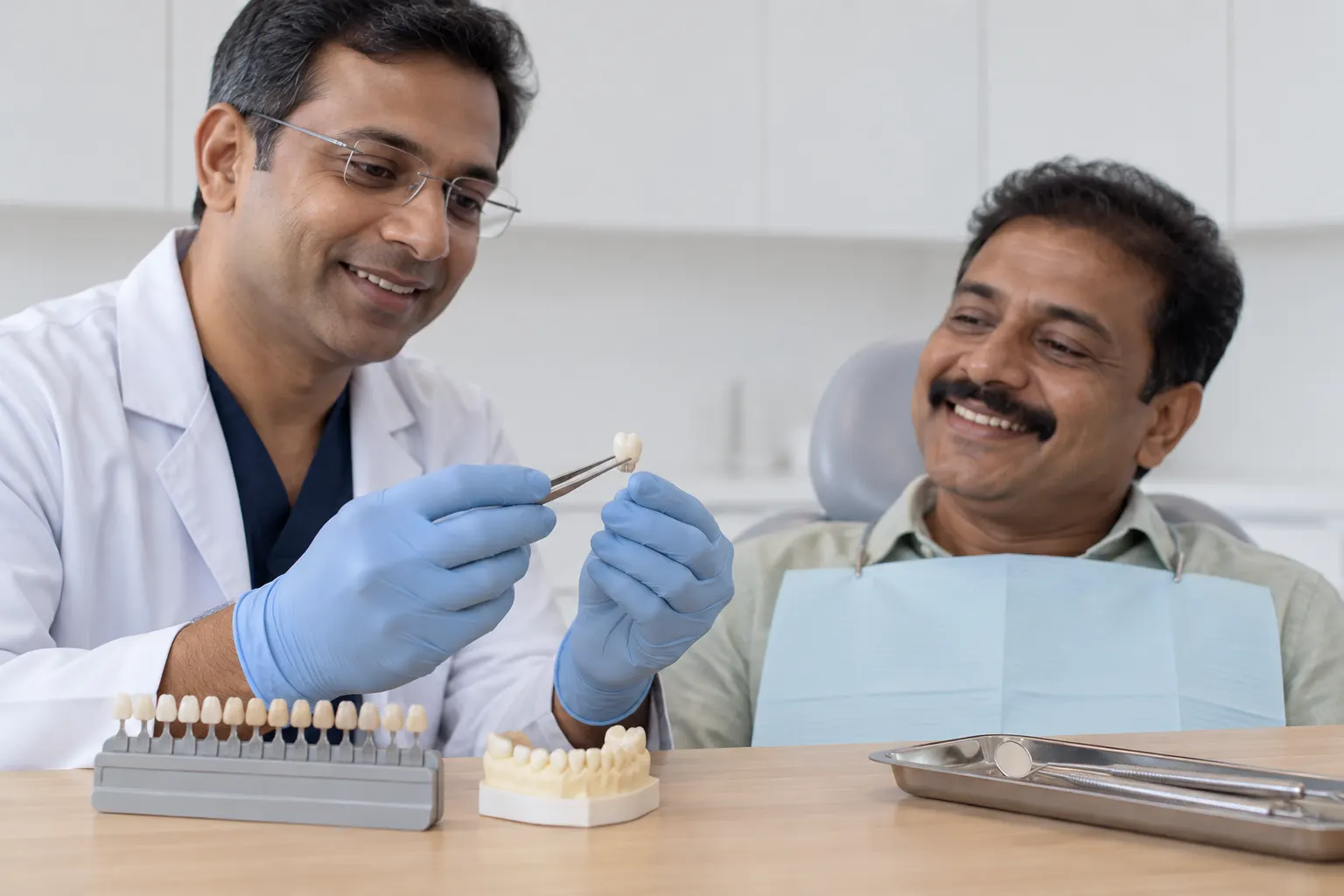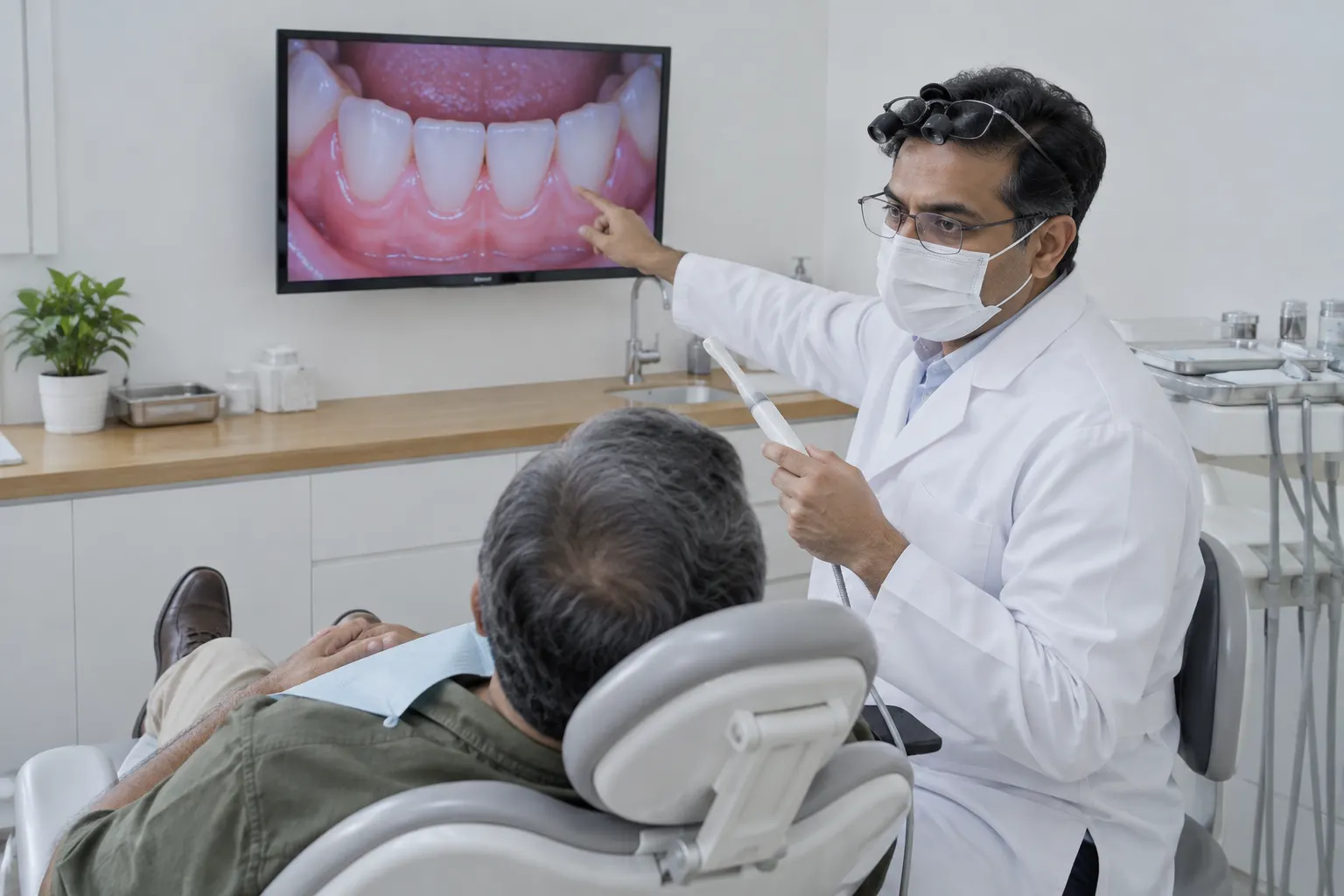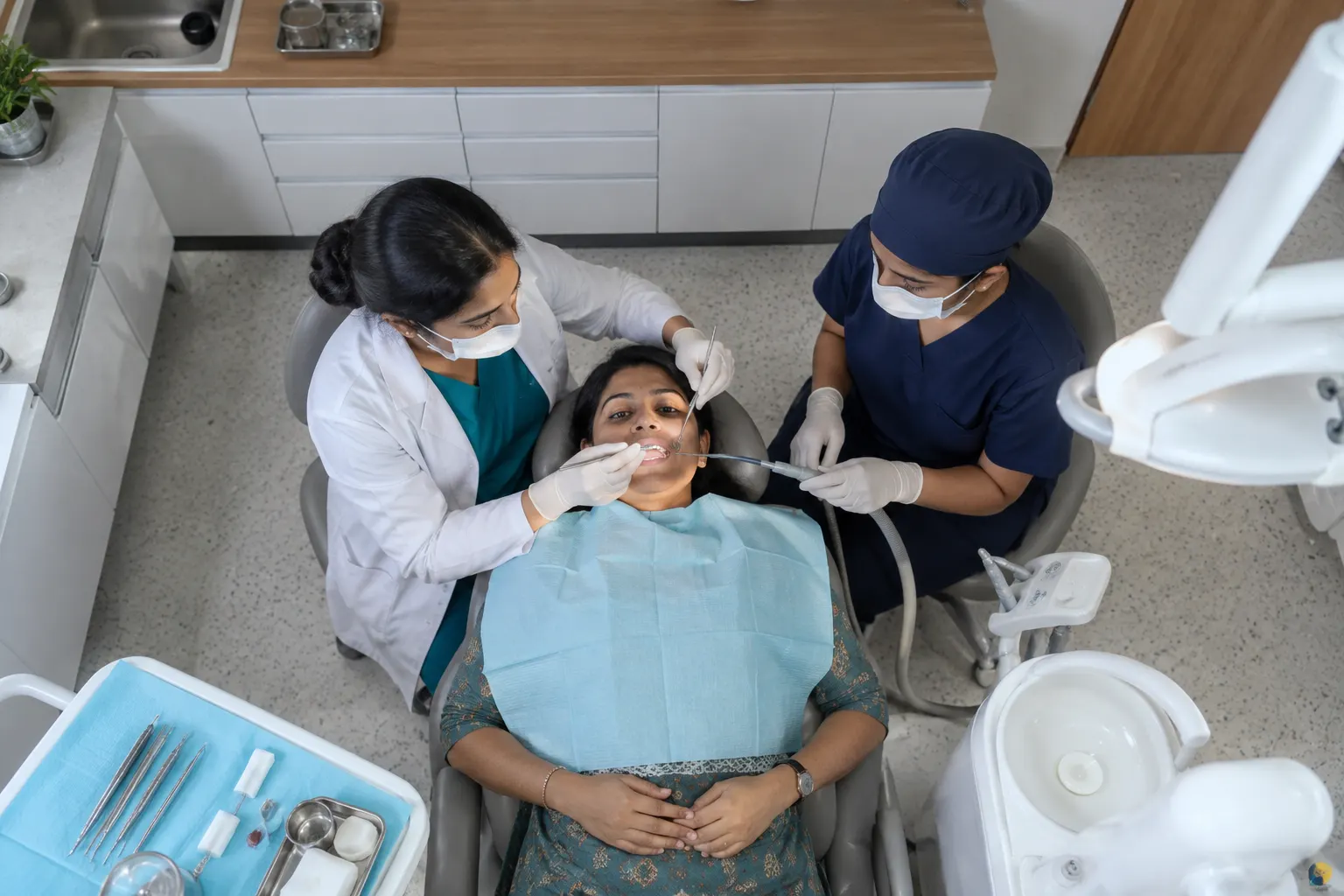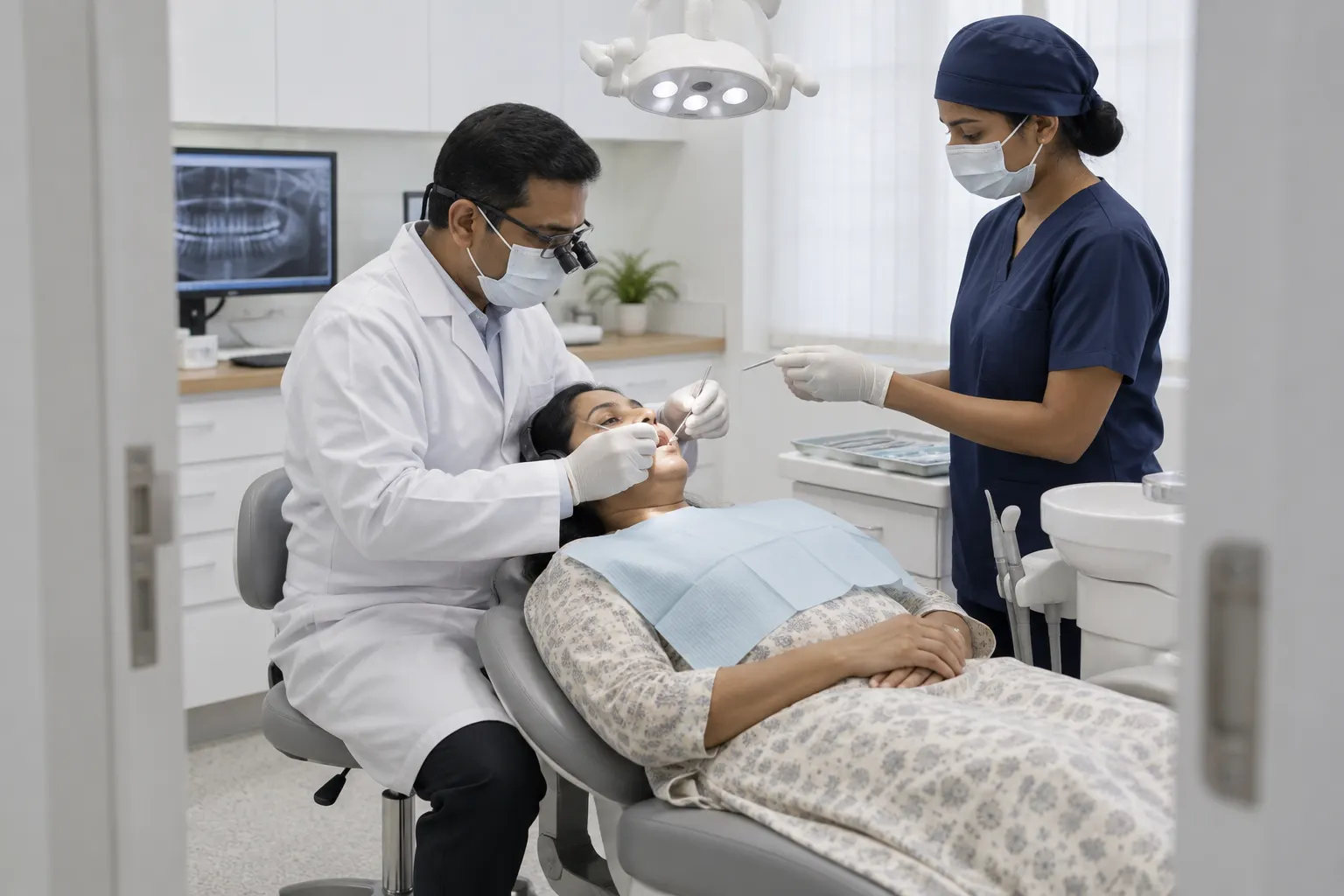
Inside every tooth is soft tissue called the pulp, which holds nerves and blood vessels. When deep decay or a crack lets bacteria reach it, the pulp becomes inflamed or infected. Root canal treatment removes that tissue, disinfects the canals and seals them, so the tooth can stay in your mouth for years.
You might need this if…
- Throbbing pain, especially at night
- Lingering sensitivity to hot or cold
- Pain when biting
- Swelling or a pimple on the gum
- A tooth that has darkened
How it’s done
- 1
Diagnosis
Examination and a digital X-ray show the infection and the shape of the roots.
- 2
Anaesthesia
The tooth is fully numbed. Most patients say it feels like a long filling.
- 3
Cleaning the canals
We open the tooth and clean and shape each canal with flexible rotary instruments, rinsing with disinfectant.
- 4
Sealing
The clean canals are filled with a biocompatible material and the tooth is sealed.
- 5
Protecting the tooth
Back teeth usually need a crown afterwards, because a root-treated tooth is more brittle and can crack.
Afterwards
- Tenderness on biting for a few days is normal; simple painkillers usually help. Ask us what suits you.
- Avoid chewing hard food on the tooth until the final filling or crown is placed.
- Get the crown done when advised; an unprotected tooth can fracture.
Questions patients ask
The treatment itself is done under local anaesthesia, so it should not be painful. It is the infection that hurts. Treatment is what relieves it.
Keeping your own tooth is usually the better long-term choice. An extracted tooth leaves a gap that typically needs a bridge, implant or denture, and neighbouring teeth can drift.
Often, yes. Single-sitting treatment depends on the tooth and how severe the infection is; some cases need a second visit to let the infection settle first.
Back teeth almost always do, because they take heavy chewing forces. Front teeth with little damage may only need a filling.
This page is general information, not a diagnosis. We will advise you properly after an examination.