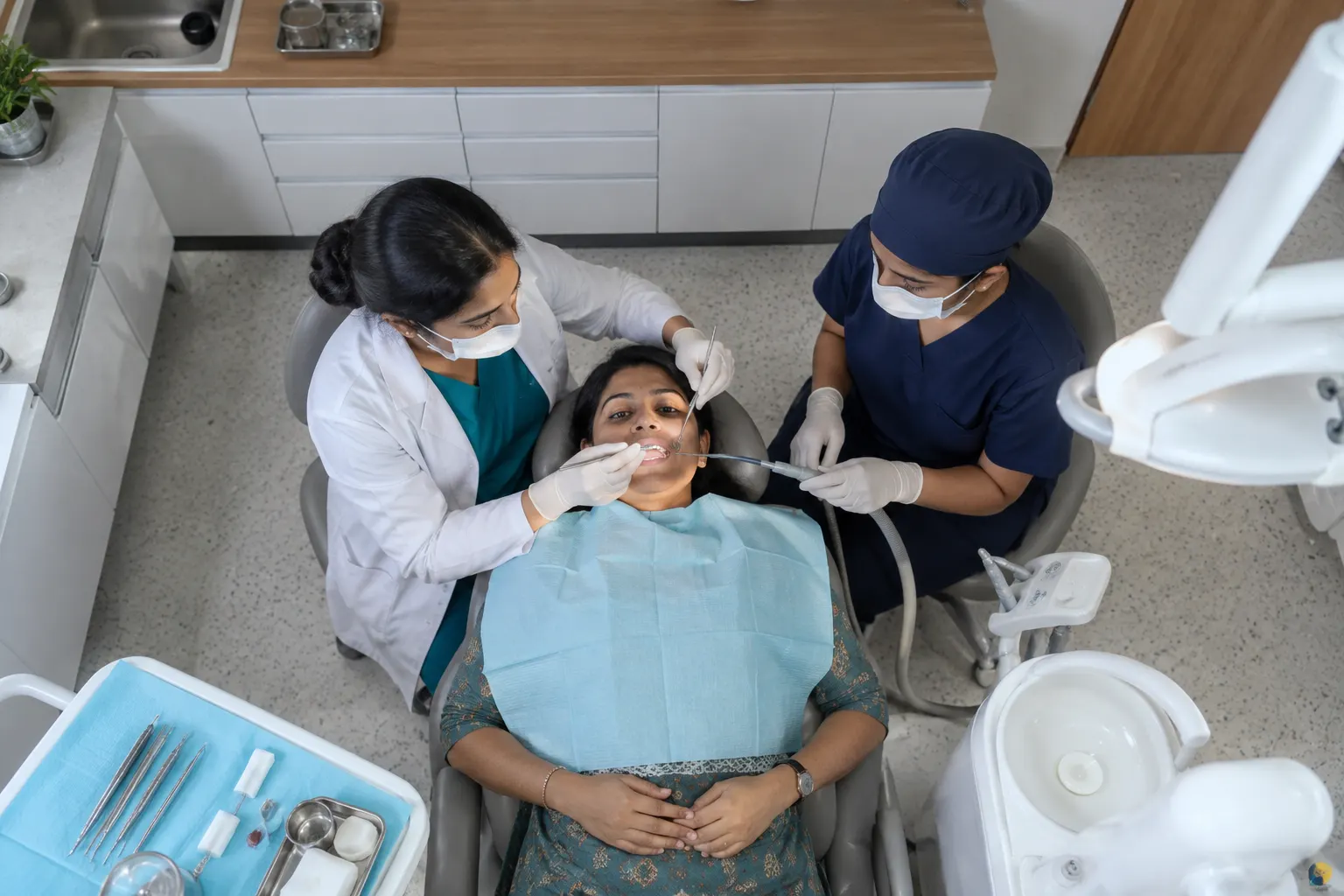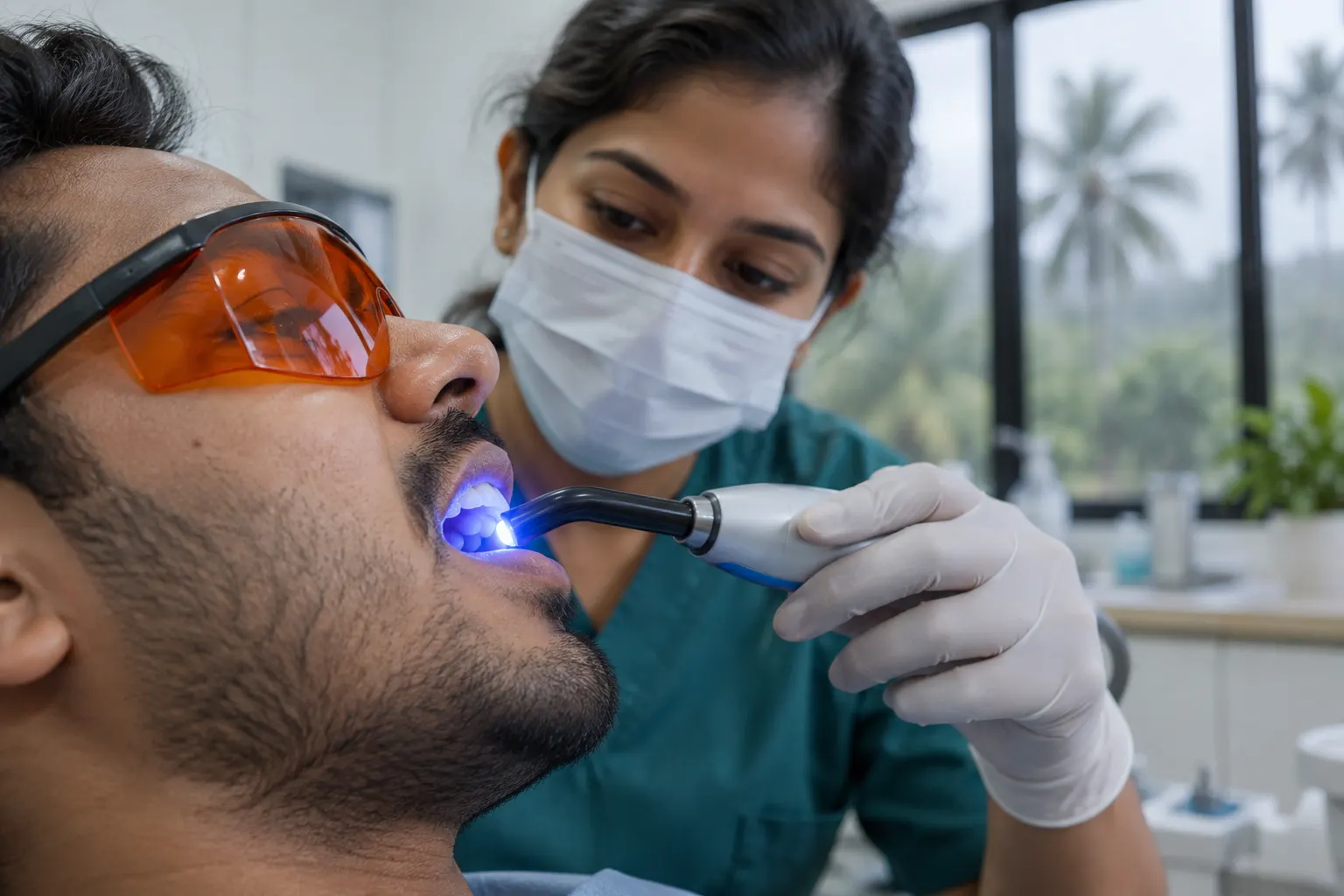
A good first experience shapes how a child feels about the dentist for life. We keep early visits short and positive, explain everything in their language, and focus on prevention so treatment is rarely needed.
You might need this if…
- Your child’s first birthday has passed
- White or brown spots on baby teeth
- Thumb-sucking beyond age 4
- Toothache or a broken tooth after a fall
How it’s done
- 1
Meet & greet
A ride in the chair, a look at the instruments, counting teeth together.
- 2
Gentle check
We check teeth, jaw growth and habits, and show parents how to brush effectively.
- 3
Prevention
Fluoride varnish and pit-and-fissure sealants protect teeth that are prone to decay.
- 4
Treatment if needed
Small fillings or baby-tooth treatment are done patiently, with breaks.
Afterwards
- Brush twice daily: a rice-grain smear of fluoride toothpaste under 3, a pea-sized amount from 3 to 6.
- Limit sweets and juices to mealtimes; water between meals.
- No bottle in bed except water.
Questions patients ask
Yes. Back milk teeth stay until around age 10–12. Decay in them hurts, can cause infections that affect the adult teeth underneath, and early loss can crowd the adult teeth.
Keep it positive and simple: ‘the dentist will count your teeth’. Avoid words like ‘hurt’ or ‘injection’. Morning appointments usually work best.
A thin protective coating painted into the grooves of back teeth, where most childhood cavities start. It’s quick and painless.
This page is general information, not a diagnosis. We will advise you properly after an examination.