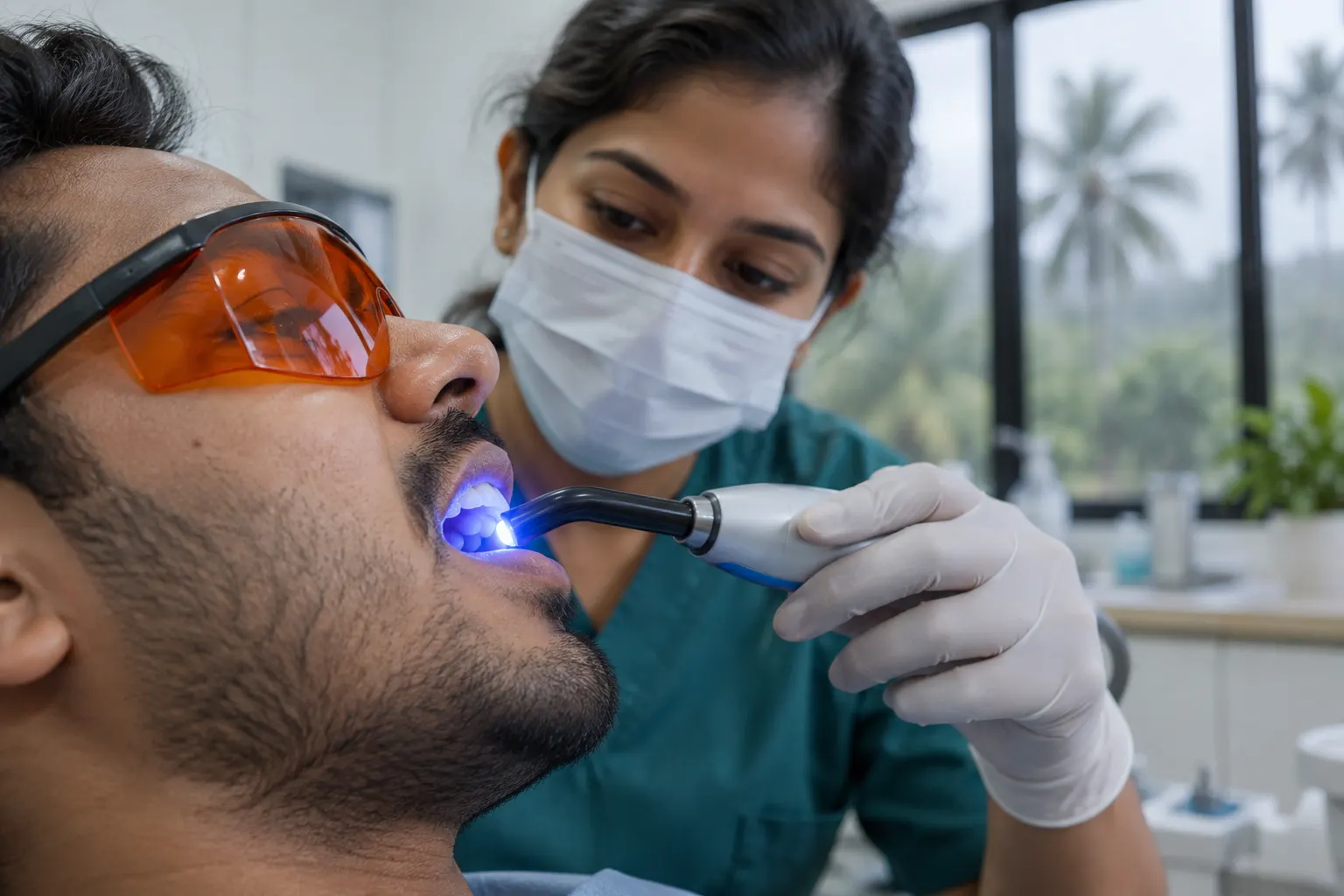
Cosmetic dentistry changes the shape, colour or alignment of teeth. Composite bonding adds tooth-coloured material with little or no drilling; veneers are thin facings bonded to the front of teeth for a longer-lasting, more uniform result.
You might need this if…
- Chipped or uneven front teeth
- Small gaps
- Stains that whitening can’t lift
- Teeth that look too short or worn
How it’s done
- 1
Smile consultation
We discuss what bothers you and photograph your smile, and check that teeth and gums are healthy first.
- 2
Plan & preview
We explain each option, such as whitening, bonding, veneers or braces, and what it would achieve.
- 3
Treatment
Bonding is usually done in one visit; veneers take two or more.
Afterwards
- Don’t bite nails, pens or ice with bonded or veneered teeth.
- Composite can stain over time. Regular polishing helps.
- A night guard protects your work if you grind.
Questions patients ask
Bonding is quicker, more affordable and usually reversible, but stains and chips more easily. Porcelain veneers last longer and resist staining, but require removing a thin layer of enamel.
That is the goal. We match shade and translucency to your teeth and keep proportions in harmony with your face.
This page is general information, not a diagnosis. We will advise you properly after an examination.